
Pakistan is home to one of the most ambitious social welfare initiatives in South Asia — the Benazir Income Support Programme (BISP). Launched in 2008 under the leadership of President Asif Ali Zardari in memory of Shaheed Benazir Bhutto, BISP has grown from a modest financial assistance program into a comprehensive social safety net reaching over 10 million deserving families across every province and territory of Pakistan.
In 2026, BISP continues to be the third-largest budget allocation in Pakistan, with an approved disbursement of Rs 716 billion. Whether you are a beneficiary trying to check your BISP payment, a new applicant looking to understand the BISP registration process, a student researching Pakistan’s social protection system, or a policymaker evaluating the program’s impact — this complete guide covers everything you need to know.
What Is the Benazir Income Support Programme?
The Benazir Income Support Programme (BISP) is a federal government social safety net program in Pakistan, administered by the Ministry of Poverty Alleviation and Social Safety (PASS). At its core, BISP provides unconditional and conditional cash transfers to low-income, deserving families — primarily targeting women as the primary beneficiaries to promote gender equality, financial inclusion, and women’s economic empowerment.
BISP operates on the principle that poverty is best addressed by providing direct financial support to those most in need, while simultaneously investing in education, health, and skill development to break the intergenerational cycle of poverty. The program uses a scientific, data-driven approach to identify beneficiaries through the National Socio-Economic Registry (NSER) and proxy means testing methodology.
BISP History — Founded in 2008 by Shaheed Benazir Bhutto’s Legacy
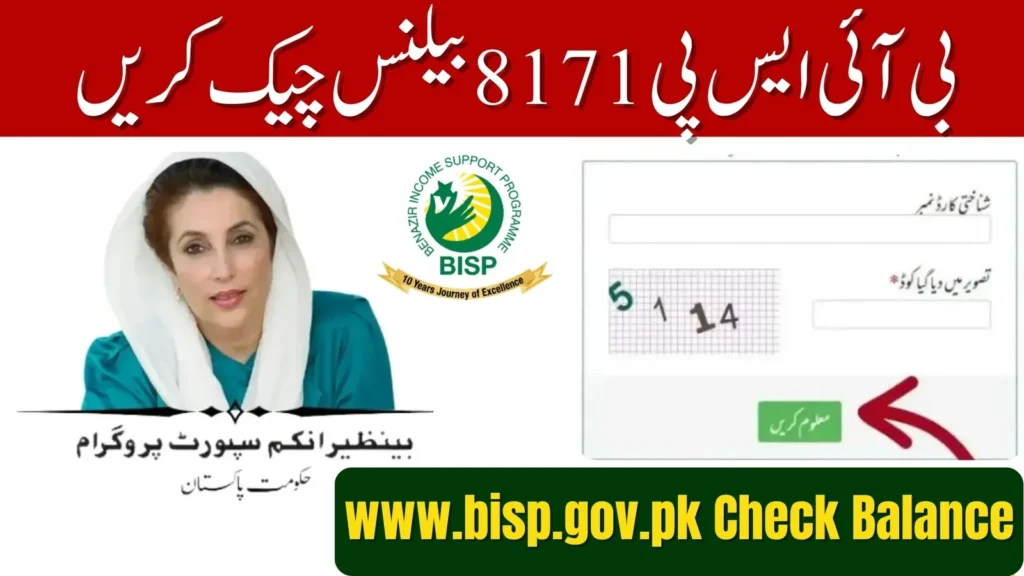
BISP was established in 2008 during the government of President Asif Ali Zardari, with the explicit purpose of honoring the legacy of former Prime Minister Shaheed Benazir Bhutto, who was a champion of women’s rights and poverty alleviation throughout her political career. The program was initially designed to provide Rs 1,000 per month to the poorest households, with a focus on women as recipients to ensure that financial support directly reached those managing household needs.
Over the following 17 years, BISP underwent significant transformation. The program expanded its beneficiary base from an initial 1.7 million families to over 10 million households. The stipend amount increased substantially to keep pace with inflation, and new conditional sub-programs were added to address education, nutrition, and skill development alongside the core cash transfer.
BISP Headquarters and Governance Structure
BISP is headquartered in Islamabad and operates under the Ministry of Poverty Alleviation and Social Safety (PASS). The program maintains a nationwide network of offices including provincial offices in Lahore (Punjab), Karachi (Sindh), Quetta (Balochistan), and Peshawar (KPK), district offices in every district of Pakistan, tehsil-level offices for direct beneficiary service, and field offices and mobile registration camps in rural and remote areas.
The program’s governance involves a dedicated chairperson and a board of directors, with parliamentary oversight through the National Assembly’s standing committee on BISP. International development partners including the World Bank, DFID (now FCDO), USAID, GIZ, and KFW provide technical and financial support for program improvement, monitoring, and evaluation.
BISP Sub-Programs — A Complete Overview
BISP is not a single program but a comprehensive family of interventions designed to address multiple dimensions of poverty simultaneously. In 2025, BISP operates four major sub-programs under the unified Benazir brand:
1. Benazir Kafaalat — Core Cash Transfer
Benazir Kafaalat is the flagship unconditional cash transfer program that forms the backbone of BISP. Under Kafaalat, eligible women receive Rs 14,500 per quarter (three months) through a dedicated Kafaalat smart card. This payment is unconditional — meaning beneficiaries do not need to meet specific requirements beyond their initial eligibility determination to receive it. Kafaalat currently reaches approximately 10 million women across Pakistan.
2. Benazir Taleemi Wazaif — Education Stipend
Benazir Taleemi Wazaif is a conditional cash transfer program that provides education stipends to children of BISP beneficiary families who are enrolled in school and maintain minimum attendance requirements. The program has enrolled over 12 million children and has disbursed over Rs 63 billion in education stipends. Stipend amounts vary by education level and gender, with higher amounts for girls to incentivize female education.
3. Benazir Nashonuma — Nutrition and Health Program
Benazir Nashonuma targets the first 1,000 days of a child’s life — from conception to age two — which is the most critical period for physical and cognitive development. The program provides cash transfers to pregnant and lactating mothers conditional on regular health checkups and nutritional support. A landmark study by Aga Khan University found that Nashonuma reduced child stunting rates by 6.4% nationally and up to 20% in some areas within just six months of program implementation. Currently over 3.6 million women are enrolled in Nashonuma.
4. Benazir Hunarmand — Skill Development Program
Benazir Hunarmand provides vocational and skills training to BISP beneficiary women, enabling them to graduate from dependency on cash transfers to economic self-sufficiency. The program partners with universities, training institutes, and GIZ (German International Cooperation) to deliver market-oriented skills including stitching, IT, beauty and salon services, and other income-generating trades. Successful graduates receive a BISP graduation bonus to help them start their own microenterprises.
BISP Eligibility Criteria 2026
Not every Pakistani household qualifies for BISP support. The program uses a rigorous, scientific methodology to identify the most deserving families. Understanding BISP eligibility criteria is essential whether you are applying for the first time, have been disqualified, or are helping someone in your community navigate the process.
The Poverty Scorecard and Proxy Means Testing
BISP uses a methodology called proxy means testing (PMT) to assess the economic status of households. Rather than relying solely on reported income — which can be difficult to verify in informal economies — PMT uses observable household characteristics as proxies for economic wellbeing. These include housing quality (walls, roof, floors), access to utilities (electricity, gas, clean water), asset ownership (land, livestock, vehicles, appliances), educational attainment of household members, occupation types, and household size and composition.
Each household is assigned a poverty score based on these characteristics. Households below a certain threshold are classified as eligible for BISP support. This score is determined through the National Socio-Economic Registry (NSER) survey, conducted by trained BISP enumerators across the country.
Income Threshold and Household Criteria
Households with a monthly income below Rs 25,000 and a sufficiently low poverty score on the PMT are generally eligible for BISP. Women are the designated beneficiaries within eligible households — the BISP payment is made in the name of the female head of household or the primary adult woman in the family. This policy ensures that financial support reaches the person most likely to direct it toward family welfare, particularly children’s health and education.
Special Eligibility Categories
BISP makes special provisions for particularly vulnerable groups including widows who are the sole providers for their households, women with disabilities, elderly women above 60 years of age with no other income source, transgender individuals living in poverty, and religious minorities in economically marginalised communities.
BISP Payment Schedule and Amounts 2026
BISP payments under the Kafaalat program are distributed on a quarterly basis — four times per year. The current quarterly payment under Benazir Kafaalat is Rs 14,500. This represents a significant increase from earlier years and reflects the government’s attempt to partially offset the impact of inflation on low-income households.
2026 Quarterly Payment Calendar
The four quarterly installments in a typical BISP year cover January through March (Q1), April through June (Q2), July through September (Q3), and October through December (Q4). In addition to these regular payments, BISP has historically issued special installments during Ramadan to help beneficiary families manage the additional expenses of the holy month. Beneficiaries should check the 8171 web portal or send their CNIC to 8171 via SMS to confirm the exact disbursement dates for their district.
How BISP Payments Are Distributed
BISP uses multiple channels to distribute payments to beneficiaries. The Kafaalat smart card allows beneficiaries to withdraw cash from designated ATMs and payment centers. Biometric verification — fingerprint scanning through NADRA-linked machines — ensures that payments reach the correct person and prevents fraud. In remote areas, mobile payment teams visit communities directly to ensure access for those who cannot travel to payment centers.
How to Register for BISP 2026 — Step-by-Step
Online Registration via bisp.gov.pk
- Visit the official website bisp.gov.pk and navigate to the registration section.
- Enter your CNIC number to check whether your household has already been surveyed.
- If not surveyed, submit a registration request through the online portal.
- Provide household information including address, family members, and basic socioeconomic details.
- Wait for a BISP enumerator to visit your household for the official NSER survey.
Registration at BISP Tehsil or District Office
Applicants can also visit their nearest BISP tehsil office in person, bringing their original CNIC and CNICs of all adult household members, B-forms for children under 18, proof of address, and any documents supporting your claim of low income or special vulnerability. BISP staff will register your household for the next survey cycle.
BISP Registration Camps
BISP periodically organises registration camps in communities, particularly in rural and remote areas where access to permanent offices is limited. These camps are announced through local government channels, mosques, and community organisations. Registration at camps follows the same process as office registration.
How to Check BISP Payment and Eligibility via 8171
The 8171 helpline and web portal is BISP’s primary digital interface for beneficiaries. It allows existing and potential beneficiaries to check their eligibility status, track payment status, and access program information.
Check via SMS
Send your 13-digit CNIC number (without dashes) to 8171 via SMS. You will receive a reply indicating whether your household is registered in BISP, whether you are currently eligible for payments, and the status of your latest payment. This service is available 24/7 and is free of charge from most mobile networks.
Check via 8171 Web Portal
Visit the 8171 web portal online. Enter your CNIC number in the eligibility check field. The portal will display your registration status, payment history, and upcoming payment information. The portal is available in both Urdu and English.
BISP Province-wise Coverage 2026
BISP operates in all four provinces, two autonomous regions, and the federal territory of Pakistan. The program’s coverage and distribution channels are adapted to local conditions in each region.
- Punjab: Largest beneficiary base, covering urban and rural districts from Lahore to remote southern Punjab areas including Rahim Yar Khan, Muzaffargarh, and Rajanpur.
- Sindh: Significant coverage in rural Sindh districts including Thar, Sukkur, Larkana, and Jacobabad, which have some of Pakistan’s highest poverty rates.
- Balochistan: Special mobile teams and extended camp programs serve the geographically vast and sparsely populated province.
- Khyber Pakhtunkhwa (KPK): Coverage extends to merged tribal districts (formerly FATA) where poverty and disruption from conflict required special programming.
- Azad Kashmir and Gilgit Baltistan: Full coverage with adapted delivery mechanisms for mountain communities.
- Islamabad Capital Territory: Urban poor in the federal capital are covered through designated BISP offices.
BISP vs Ehsaas Programme — Understanding the Difference
A common source of confusion among beneficiaries and the public is the relationship between BISP and the Ehsaas Programme. The answer is straightforward: they are essentially the same program under different names, reflecting different government administrations.
BISP was renamed and rebranded as Ehsaas during the PTI government (2018-2022) under Prime Minister Imran Khan, which expanded the program significantly and added new components. When the PDM-led government took power in 2022 and the Pakistan Muslim League (N)-led coalition continued with PPP support, the program was reverted to the BISP name with the Benazir branding for its sub-programs. The core cash transfer program, previously called Ehsaas Kafaalat, was renamed Benazir Kafaalat.
International Partners and Funding
BISP benefits from substantial international support that helps fund the program and improve its systems. The World Bank has been BISP’s largest external partner, providing multiple loans and grants for program expansion and system improvements. USAID has supported BISP’s targeting system and digital infrastructure. GIZ (German Development Cooperation) has been instrumental in developing the Hunarmand skill training component. DFID (UK Foreign Commonwealth and Development Office) funded research and evaluation of the program’s impact. KFW (German Development Bank) has supported infrastructure investments for program delivery. The Czech Republic has established a bilateral cooperation framework with BISP for program knowledge exchange.
BISP Budget and Economic Scale
BISP’s Rs 716 billion budget for 2025-26 makes it one of the most significant fiscal expenditures of the Pakistani government. This represents approximately 1.5-2% of Pakistan’s GDP and reflects the government’s prioritization of poverty alleviation as a national objective. The scale of the program means that BISP payments constitute a meaningful portion of the consumption budget of the 10 million recipient households — providing a vital economic floor that prevents the poorest families from falling into absolute destitution.
Frequently Asked Questions About BISP
Q: What is BISP Pakistan?
A: BISP (Benazir Income Support Programme) is Pakistan’s largest federal social safety net, providing cash transfers and support programs to over 10 million low-income families. It is run by the Ministry of Poverty Alleviation and Social Safety (PASS).
Q: Who qualifies for BISP?
A: Households below the poverty threshold as determined by the NSER survey and proxy means testing qualify. Women are the primary recipients. Income must generally be below Rs 25,000 per month. Government employees and high-income households are excluded.
Q: How much does BISP pay?
A: Under Benazir Kafaalat, eligible women receive Rs 14,500 per quarter (every three months). Additional payments are available for children enrolled in school through Taleemi Wazaif.
Q: Can men apply for BISP?
A: BISP designates women as the primary beneficiary within eligible households. Men in qualifying low-income households are covered through their female family members as the registered recipient.
Q: Is BISP the same as Ehsaas?
A: Yes — Ehsaas was the name given to BISP during the PTI government (2018-2022). The current government reverted to the BISP name. The programs are fundamentally the same with some differences in sub-program design and naming.
Q: How do I check my BISP payment status?
A: Send your 13-digit CNIC number to 8171 via SMS, or visit the 8171 web portal online. Both services are free and available in Urdu and English.
Conclusion
The Benazir Income Support Programme represents Pakistan’s most ambitious commitment to poverty alleviation and social protection. With Rs 716 billion reaching 10 million families in 2025, BISP is not merely a welfare program — it is a foundational pillar of Pakistan’s social contract with its most vulnerable citizens. From the Kafaalat cash transfer that provides economic dignity to millions of women, to Taleemi Wazaif that keeps children in school, to Nashonuma that fights the scourge of child stunting, to Hunarmand that builds pathways out of poverty — BISP represents a holistic, evidence-based approach to breaking the cycle of poverty in Pakistan.
For detailed information on specific aspects of BISP, explore our complete guide series covering BISP Registration, Eligibility Criteria, Payment Schedule, 8171 Online Check, Kafaalat Program, Taleemi Wazaif, Nashonuma, Hunarmand Skills Training, and BISP Impact Report 2025.