
Yes, trading bots can work and generate profits, but they are not magical money-makers. They function by automating pre-set, rule-based strategies including AI-driven, high-probability setups—to execute trades faster than humans, with some specialized bots achieving win rates over 85%. Profitability depends on a working strategy, as bots only amplify existing efficiency.
But the real question remains.
Do trading bots actually work and make profit?
This guide explains how they work, when they make money, and where most traders go wrong.
What Are Trading Bots?
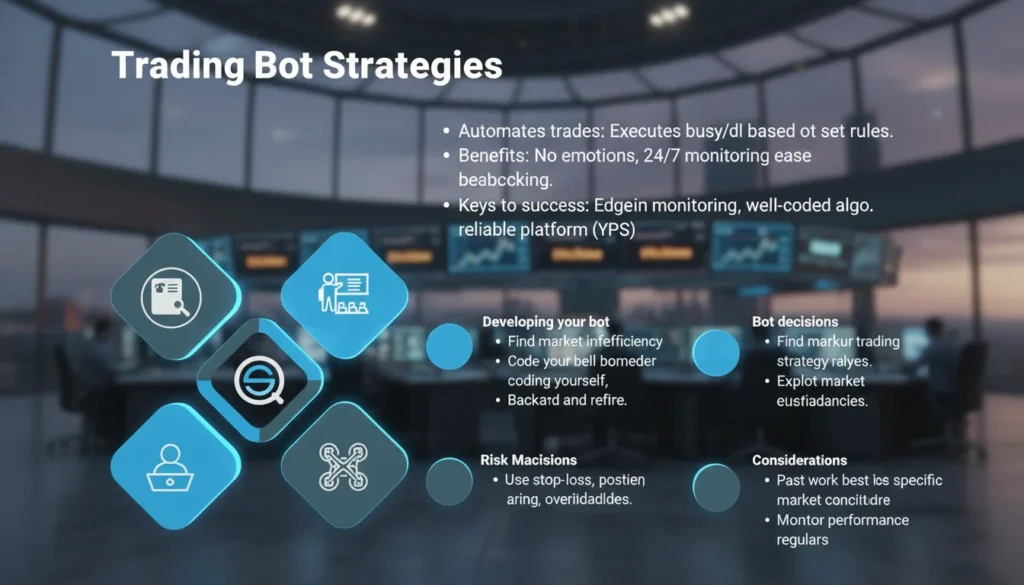
Trading bots are automated software programs that buy and sell financial assets based on preset rules. They scan market data, detect signals, and execute trades instantly. Because bots operate 24/7 and follow strict rules, many traders use them to remove emotion and capture small price movements.
A trading bot connects to an exchange through an API.
Then it follows a programmed trading strategy.
Common strategies include:
- Grid trading
- Arbitrage trading
- Trend following
- Dollar-cost averaging
Bots track indicators such as:
- Moving averages
- Price momentum
- Trading volume
Once the conditions match the strategy, the bot places the trade.
Unlike human traders, bots never sleep.
Many people exploring automated trading also look for tools that improve personal finances and financial habits. If you’re interested in similar automation tools, you can read about AI tools that improve credit score and savings and how AI helps people manage money more efficiently.
Industry estimates suggest that over 80% of crypto trading volume now involves automated systems.

Do Trading Bots Actually Make Profit?
Yes, trading bots can generate profit. Profit depends on the strategy, market conditions, and risk management rules. A bot executes instructions faster than a human. If the strategy performs well, the bot can produce gains. If the strategy fails, the bot can produce losses quickly.
Think of a bot like a race car.
Fast machine. Skilled driver needed.
Research shows many automated systems can produce steady returns when properly configured.
Most sustainable strategies aim for 2% to 5% monthly returns rather than huge short-term gains.
Any platform promising massive guaranteed profits should raise concern.
How Trading Bots Make Money
Trading bots profit by identifying small price differences in the market. These opportunities appear constantly across exchanges and trading pairs.
Here are the most common strategies.
Arbitrage
Bots scan multiple exchanges.
If Bitcoin costs less on one platform and more on another, the bot buys low and sells high.
Profit comes from the price difference.
Grid Trading
Grid bots place buy and sell orders across a price range.
The strategy works well in sideways markets.
As prices move up and down, the bot collects small profits.
High-Frequency Trading
Some bots execute dozens or even hundreds of trades in seconds.
Small profits from each trade accumulate over time.
Humans cannot react at that speed.
Trend Following
The bot tracks price momentum.
If the market trends upward, the bot enters a buy position.
When momentum slows, the bot exits.
What Is the Success Rate of Trading Bots?
Most trading bots report win rates between 50% and 80%. Win rate alone does not determine profitability. A bot can win many trades and still lose money if losses are larger than gains.
Many beginners misunderstand this concept.
Example:
- 8 winning trades earning $5 each
- 2 losing trades losing $50 each
The result is a loss overall.
Experienced traders track additional metrics:
- Profit factor
- Maximum drawdown
- Risk-to-reward ratio
These numbers reveal whether a strategy truly works.
Advantages of Using Trading Bots
Bots solve several problems human traders face.
1. No emotional trading
Fear and greed affect many traders.
Bots follow programmed rules.
No panic decisions.
2. Faster execution
Markets move quickly.
Bots execute trades in milliseconds.
3. 24/7 market monitoring
Crypto markets run all day.
Bots watch the market at all times.
4. Strategy automation
Once the strategy runs, the bot handles execution.
Automation tools are becoming common in online finance. If you want to explore more technology and digital income ideas, the Job Presence blog section shares similar insights about automation tools and modern online work.
Risks of Using Trading Bots
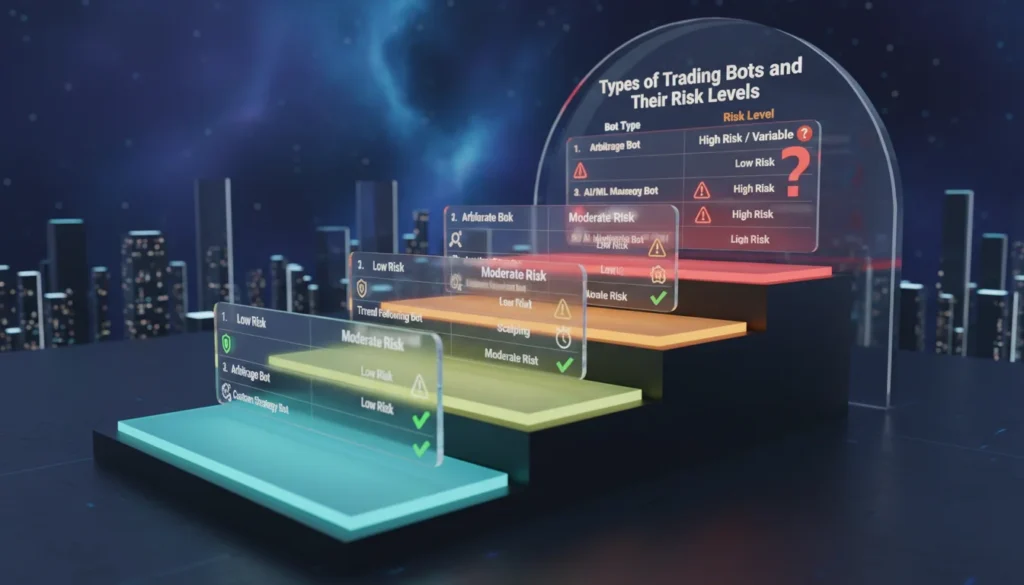
Automated trading also carries risks.
Ignoring them leads to losses.
Poor strategy
A bot cannot repair a bad trading plan.
It only executes the rules.
Market crashes
Extreme volatility can damage automated systems.
Bots may keep trading during sudden drops.
Scam bots
Some platforms promise guaranteed profits.
Many of these services lack real performance data.
Over-optimization
Some strategies perform well in past data but fail in live markets.
This problem occurs often in automated trading.
Real Profit Examples From Trading Bots
Some traders report steady gains using automated strategies.
For example, grid trading systems sometimes produce 2% to 8% monthly returns in stable markets.
Advanced algorithmic systems in research settings have produced annual returns above 30% under certain conditions.
Results vary widely.
Markets change.
Strategies must adjust.
Bots are tools.
Not automatic income systems.

Are Trading Bots Legal in the United States?
Yes, trading bots are legal in the United States. Many exchanges allow automated trading through APIs. Traders must follow exchange rules and financial regulations when running automated strategies.
Most major exchanges support API trading.
Common platforms include:
- Binance
- Coinbase
- Kraken
Some traders build custom bots using programming languages like Python.
Algorithmic trading is common among large financial firms.
Industry reports suggest over 40% of professional trading funds use automated systems.
Should Beginners Use Trading Bots?
Bots can help beginners.
But careful use matters.
Start small.
Test strategies before risking large capital.
Learn the basics of trading first.
Bots follow instructions.
They do not create profitable strategies on their own.
FAQs About Trading Bots
Are trading bots profitable?
Trading bots can be profitable when used with a well-tested strategy and proper risk management. The bot executes trades automatically, but profit still depends on market conditions and how the strategy handles risk.
Do trading bots work in crypto trading?
Yes, trading bots are widely used in crypto markets because cryptocurrency exchanges operate 24/7. Bots can monitor price movements and execute trading strategies faster than human traders.
Can beginners use trading bots?
Beginners can use trading bots, but they should start with small capital and test strategies carefully. Understanding basic trading concepts helps reduce the risk of losses.
Are trading bots safe to use?
Trading bots are generally safe when connected to trusted exchanges using secure API permissions. Many traders disable withdrawal access to improve security.
Final Thoughts
Trading bots working and making profit is possible.
But success depends on strategy, discipline, and risk management.
Trading bots execute trades faster than humans and remove emotional decision-making. However, they still rely on the strategy created by the trader.
Used correctly, trading bots can become powerful tools for automated trading.
For more guides about automation, AI tools, and online income opportunities, visit the Job Presence website where similar financial technology topics are discussed.