
Remote work statistics reveal a workplace revolution that began long before you might think. Although only 6.5 percent of private sector workers primarily worked from home in 2019, the COVID-19 pandemic triggered an unprecedented experiment in remote work adoption across industries.
The transition to remote work has created a fascinating paradox. Fully remote workers are more likely to be engaged at work (31%) compared to hybrid (23%) or on-site employees. However, these same remote workers also report higher levels of emotional distress and job-hunting behavior, with 57% actively or passively looking for new opportunities.
Furthermore, productivity growth has shown a positive correlation with increased remote work percentages across 61 industries, despite 70 percent of small business owners initially reporting productivity declines during the early pandemic transition.
In this comprehensive analysis of remote work statistics, you’ll discover how the work landscape has transformed since approximately 40% of EU employees began teleworking full-time due to the pandemic.
You’ll also understand why 21 percent of workers report willingness to accept pay cuts exceeding 10 percent to maintain their work-from-home arrangements and how organizations can address the complex challenges of communication, collaboration, and employee engagement in virtual environments.
The rise of remote work: A 2025 snapshot
The transition from traditional offices to virtual workspaces marks one of the most significant shifts in modern work culture. In 2019, merely 6.5% of workers in the private business sector primarily worked from home, with remote work actually declining from previous decades.
Remote work statistics before and after COVID
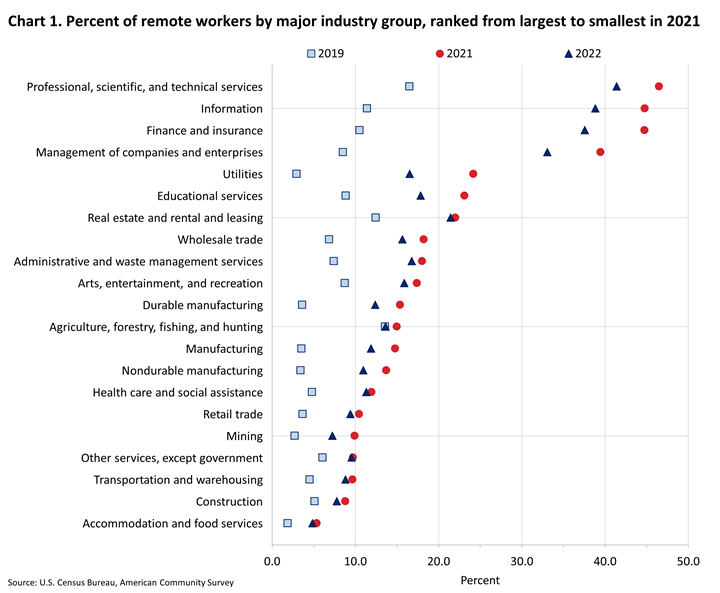
The pandemic dramatically accelerated remote work adoption across the economy. Between 2019 and 2021, the percentage of remote workers skyrocketed in nearly all major industries. Even after social distancing policies ended in 2022, remote work participation remained significantly higher than pre-pandemic levels. According to the Census Bureau’s American Community Survey, the number of Americans primarily working from home jumped from 4.2 million (3.2% of workers) in 2000 to 27.6 million (17.9%) in 2021. Currently in 2025, approximately 32.6 million Americans work remotely, representing about 22% of the workforce.
Industries with the highest remote work adoption
Four major industries experienced phenomenal increases in remote adoption (over 30 percentage points) between 2019-2021: Professional/scientific/technical services, information, finance/insurance, and management of companies. Notably, in computer systems design, data processing, publishing, and insurance industries, the majority of workers (50.2-62.5%) worked remotely by 2021, compared to just 15-20% pre-pandemic.
Looking at the current landscape, technology leads with the highest volume of remote job listings (32% of all remote postings), followed closely by sales/marketing (25%), finance/accounting, management/strategy, and healthcare. Additionally, senior-level roles show the highest flexibility rates, with nearly half (45%) including some form of location flexibility versus only 28% of entry-level positions.
Remote work trends shaping 2025
Several key trends are now shaping the remote work environment. First, hybrid work models that combine remote and in-office work have become standard for many organizations. This flexible approach allows companies to balance remote work benefits with in-person collaboration advantages.
Second, remote work continues to break down geographical barriers in hiring. Companies increasingly tap into global talent pools, fostering workforce diversity and sparking discussions around international labor laws.
Third, traditional office spaces are evolving to support hybrid models, with increases in hot-desking arrangements and technology-enabled meeting rooms designed for seamless integration of remote participants. Finally, employee well-being has taken center stage, with companies implementing comprehensive support systems for remote workers.
How remote work is reshaping productivity
Contrary to initial fears about declining productivity, remote work has reshaped performance metrics across industries in unexpected ways. While 70% of small business owners initially perceived productivity declines in early 2020, this pattern reversed with the median owner reporting positive productivity impact by 2021.
Remote work productivity statistics by industry
The Bureau of Labor Statistics found that industries with larger increases in remote work experienced faster productivity growth. For every 1 percentage-point increase in remote workers, there was a 0.08 to 0.09 percentage-point rise in total factor productivity (TFP) growth. The top three industries—computer systems design, internet publishing, and data processing—where remote work grew most from 2019 to 2022, saw output increase significantly while labor input remained relatively flat.
Total factor productivity vs. labor productivity
TFP measures output relative to all production inputs, whereas labor productivity focuses solely on worker output. Research by the Federal Reserve found that increases in remote work ability led to sizable productivity gains over time. Specifically, an increase in remote ability of one standard deviation (approximately 20% expansion in remote-ready employment) raised labor productivity by 20% of a standard deviation after three years.
Output vs. labor input: what changed?
The positive correlation between remote work and productivity remained consistent even when accounting for pre-pandemic productivity patterns. Moreover, remote work was associated with substantial reductions in non-labor costs, with each percentage-point increase in remote workers linked to decreases of 0.2-0.4 percentage points in secondary expenses like energy and office space.
What does low job presence mean for performance?
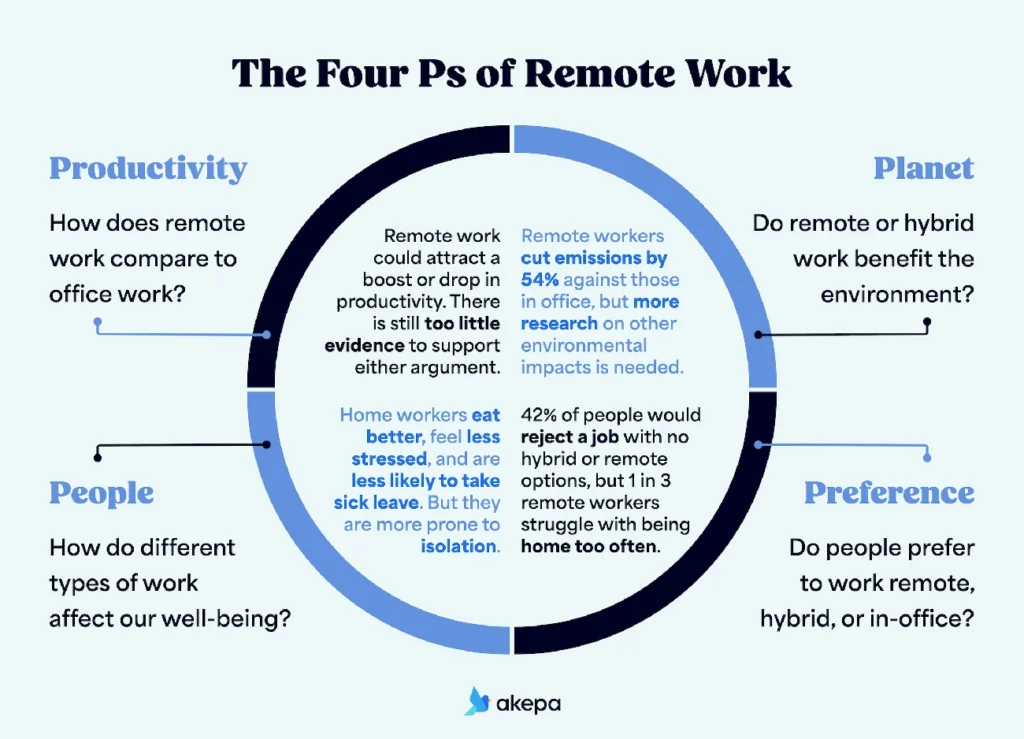
Interestingly, job performance metrics tell a complex story. Fully remote workers report higher engagement (31%) compared to hybrid workers (23%) and on-site employees (19%). Nevertheless, studies show mixed results for wellbeing, with remote workers experiencing higher stress (45% vs. 38-39% for on-site workers). This creates what researchers call the “productivity puzzle”—determining when, how, and for whom remote work enhances or undermines long-term performance.
The cost side of remote work: savings and trade-offs
The financial equation of remote work reveals substantial benefits for businesses beyond just workforce flexibility. Companies save an average of USD 11,000 annually for each remote employee, creating powerful incentives to maintain distributed teams even as pandemic pressures recede.
Unit labor and nonlabor cost trends
Remote work directly impacts both labor and nonlabor expenses. The Bureau of Labor Statistics found that increased remote work percentages correlate with reduced unit costs, especially nonlabor expenses like office buildings and services. As employees shift work locations from commercial spaces to homes, businesses naturally use fewer nonlabor inputs while maintaining output levels. Consequently, even if worker productivity remains unchanged, total factor productivity often increases as companies require less physical infrastructure.
Impact on office space and capital costs
Office space represents one of the most significant opportunities for cost reduction. Companies implementing remote work policies report approximately 30% savings on real estate costs. For context, businesses in Manhattan typically pay USD 87 per square foot for office space. Beyond rent, remote work cuts:
- Utilities (20% reduction in electricity bills)
- Office supplies (USD 600 per employee annually)
- Maintenance services (USD 500-2,000 monthly for medium offices)
- Common area expenses and property taxes
Job presence sensor and monitoring challenges
In response to remote work adoption, demand for employee surveillance tools jumped 74% in early 2020. Unfortunately, these monitoring approaches often backfire. Studies reveal 56% of monitored remote workers experience stress and anxiety, with 41% constantly wondering if they’re being watched. This surveillance paradox undermines trust—the foundation of successful remote relationships—and can diminish the engagement benefits that remote work otherwise provides.
Essentially, the cost equation for remote work extends beyond immediate savings to include complex tradeoffs in employee experience and organizational culture.
The compensation paradox: who really benefits?
Despite remote work’s productivity gains and cost savings, a puzzling compensation trend has emerged in today’s distributed workforce. The financial benefits of remote arrangements remain unevenly distributed between employers and employees, creating what economists term a “compensation paradox.”
Why productivity gains didn’t raise wages
Studies examining the relationship between remote work utilization and wage growth reveal complex dynamics. Contrary to expectations, productivity improvements haven’t consistently translated to higher compensation. In fact, approximately 40% of employers now pay remote workers based on their home location’s market rate rather than office location rates. This geographic pay differentiation creates substantial disparities, with industries like IT & Services showing median remote salaries of $3,592,839 while Financial Services positions average just $67,696.
Employee engagement in remote environments
Surprisingly, fully remote workers report the highest engagement levels (31%) compared to hybrid (23%) and on-site employees (19%). This engagement advantage stems from increased autonomy, which enables workers to better utilize their strengths and achieve flow states more easily. Yet this benefit comes with a significant tradeoff—52% of workers would accept a 5% or higher pay cut to maintain location flexibility.
Remote work and employee engagement disconnect
In spite of higher engagement, remote workers experience a troubling wellbeing gap. They report more frequent anger, sadness, and loneliness than their office counterparts. Importantly, only 28% of exclusively remote workers feel connected to their organization’s mission—the lowest percentage since 2011. This disconnect costs businesses an estimated $550 billion annually in lost productivity. The engagement paradox creates concerning retention patterns: 57% of fully remote workers are actively or passively job-hunting, even among those reporting high engagement.
Conclusion
Remote work has fundamentally transformed the workplace landscape since 2019, evolving from a minority arrangement to a dominant force reshaping entire industries. The data reveals a fascinating dichotomy: remote work drives significant business advantages through cost savings and productivity gains while creating complex challenges for workforce management and employee wellbeing.
Therefore, as we move forward, organizations must recognize both sides of this equation. Though businesses benefit from approximately $11,000 in annual savings per remote worker and productivity improvements across multiple sectors, these advantages come with hidden costs. Remote employees experience higher rates of emotional distress despite their increased engagement levels, leading to concerning retention patterns.
Meanwhile, geographic pay differentiation has created substantial compensation disparities between industries, raising questions about how financial benefits should be distributed between companies and their workers. This compensation paradox highlights a critical question: who truly benefits from remote arrangements?
Furthermore, the statistics reveal that technology and monitoring solutions alone cannot address the human elements of distributed work. Although 57% of remote workers actively or passively seek new opportunities, their higher engagement levels suggest the problem isn’t disinterest but disconnection from organizational purpose.
Ultimately, remote work statistics paint a picture of permanent transformation rather than temporary adaptation. The most successful organizations will be those that balance the measurable benefits of remote arrangements with thoughtful approaches to connection, wellbeing, and fair compensation. As this workplace revolution continues unfolding, your organization’s approach to these challenges will likely determine whether remote work becomes a competitive advantage or an ongoing struggle.
FAQs
Q1. How has remote work adoption changed since the COVID-19 pandemic?
Remote work adoption has increased significantly since the pandemic. In 2019, only 6.5% of private sector workers primarily worked from home. By 2025, approximately 22% of the American workforce (32.6 million people) work remotely, showcasing a dramatic shift in workplace dynamics.
Q2. Which industries have seen the highest remote work adoption?
Industries with the highest remote work adoption include professional/scientific/technical services, information technology, finance/insurance, and management of companies. Technology leads with 32% of all remote job listings, followed by sales/marketing at 25%.
Q3. How does remote work affect productivity?
Contrary to initial concerns, remote work has generally shown positive impacts on productivity. Studies indicate that for every 1 percentage-point increase in remote workers, there’s a 0.08 to 0.09 percentage-point rise in total factor productivity growth across industries.
Q4. What are the cost savings associated with remote work for businesses?
Companies save an average of $11,000 annually for each remote employee. This includes significant reductions in office space costs (about 30% savings on real estate), utilities (20% reduction in electricity bills), and office supplies (around $600 per employee annually).
Q5. How does remote work impact employee engagement and wellbeing?
Remote work presents a paradox in terms of engagement and wellbeing. Fully remote workers report higher engagement levels (31%) compared to hybrid (23%) and on-site employees (19%). However, they also experience higher rates of emotional distress and job-hunting behavior, with 57% actively or passively looking for new opportunities.