The world of work has changed forever. Whether you’re sitting in a cafe in Lisbon, a co-working space in Bali, or a beachside hostel in Thailand, remote jobs for digital nomads have made it possible to earn a living from literally anywhere on the planet. In 2026, location independent jobs are not just a dream — they’re a booming reality for millions of professionals worldwide.
This comprehensive guide covers the 25 best remote jobs for digital nomads, the skills you need to land them, where to find them, and the steps you can take today to start your digital nomad career — whether you’re a total beginner or a seasoned freelancer.
What Are Remote Jobs for Digital Nomads?
Definition of Digital Nomad Jobs
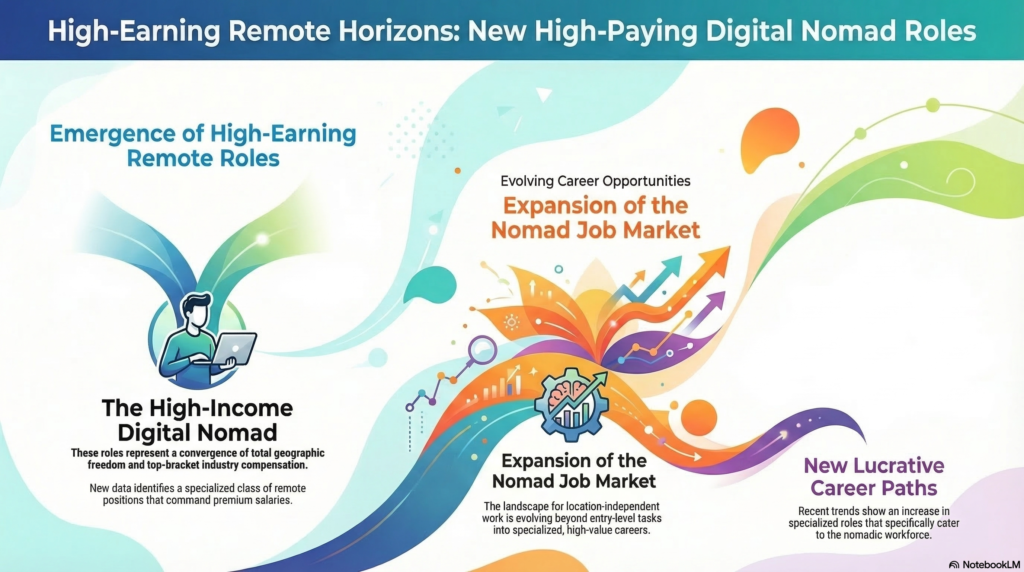
Digital nomad jobs are work arrangements that can be performed entirely online, without the need to report to a physical office. These roles rely on a laptop, a stable internet connection, and the right set of skills. A digital nomad is someone who leverages technology to work remotely while traveling or living in different locations — sometimes hopping countries, sometimes settling in a single city abroad.
How Remote Work Enables Location Independence
The rise of cloud-based tools, video conferencing platforms, and project management software has made remote collaboration seamless. Employers and clients across the globe can now hire talent without geographic restrictions. This shift has enabled a new class of professionals to achieve true location freedom — working from wherever they choose, on their own schedule.
Difference Between Remote Workers and Digital Nomads
While both remote workers and digital nomads work outside traditional offices, there’s a subtle distinction. A remote worker might work from home in the same city as their employer. A digital nomad, on the other hand, intentionally travels or lives in different locations while maintaining a remote income. The digital nomad lifestyle is defined by mobility, flexibility, and intentional living.
Why Remote Jobs Are Perfect for Digital Nomads
Benefits of Remote Careers
Remote work opportunities offer a unique set of advantages that traditional jobs simply cannot match:
- Travel Freedom: Work from any country, city, or timezone you choose.
- Flexible Schedule: Many remote roles allow asynchronous work, letting you set your own hours.
- Global Work Opportunities: Access clients and employers from the US, UK, Europe, and beyond — all while living in lower-cost countries.
- Reduced Commute: Reclaim hours each day by eliminating the daily commute.
- Improved Work-Life Balance: Build a lifestyle that supports your travel goals and personal priorities.
Growth of Remote Work Worldwide
Remote work trends show no signs of slowing down. According to industry research, over 35% of the global workforce now works remotely at least part-time. The remote workforce growth has been accelerated by major companies like Google, Airbnb, Shopify, and Spotify embracing permanent or hybrid remote policies. For digital nomads, this means an unprecedented supply of work from anywhere jobs across every industry and skill level.
25 Best Remote Jobs for Digital Nomads
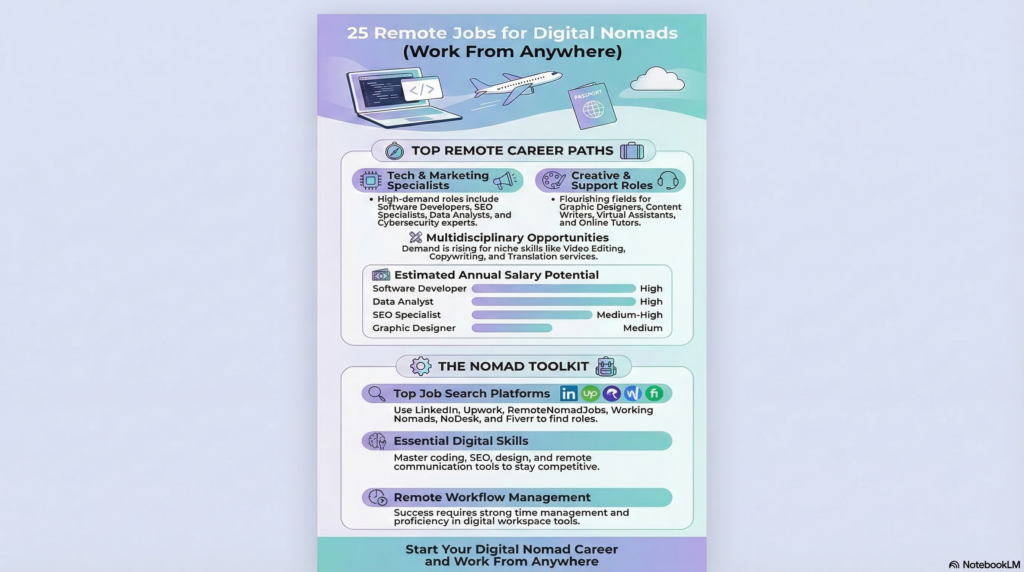
Here are the top 25 work from anywhere jobs organized by category, along with the skills required and average earning potential.
Tech Jobs (Highest Paying)
Technology roles consistently rank as the highest-paying digital nomad jobs. If you have coding skills or are willing to learn, the tech sector offers enormous earning potential.
1. Software Developer
Software developers design, build, and maintain applications and systems. This is one of the most in-demand remote programming jobs globally. Developers typically earn between $80,000 and $150,000+ per year and can work with startups, agencies, or as independent freelancers. Languages like Python, JavaScript, Java, and Swift are highly sought after.
2. Web Developer
Web developers specialize in building websites and web applications. The role spans front-end (user interface), back-end (servers and databases), and full-stack (both). It’s one of the most beginner-accessible coding jobs and a favorite entry point for aspiring digital nomads. Platforms like Upwork and Toptal are packed with web development opportunities.
3. Data Analyst
Data analysts collect, process, and interpret large datasets to help companies make better business decisions. Skills in SQL, Python, Excel, and tools like Tableau or Power BI are essential. Data analysis is a booming field with strong remote job opportunities, particularly in e-commerce, fintech, and marketing.
4. Cybersecurity Specialist
Cybersecurity professionals protect digital assets from hackers, data breaches, and malicious threats. With cybercrime at an all-time high in 2026, companies are desperate for remote cybersecurity experts. Certifications like CompTIA Security+, CISSP, or Certified Ethical Hacker (CEH) can significantly boost your earning power.
Marketing Jobs
Digital marketing is one of the most popular career paths for digital nomads. Every business needs an online presence, and skilled marketers can command strong remote salaries.
5. SEO Specialist
SEO (Search Engine Optimization) specialists help websites rank higher in Google search results. Remote SEO jobs are widely available across agencies, SaaS companies, and e-commerce brands. Skills include keyword research, on-page optimization, link building, technical SEO, and content strategy. An experienced SEO specialist can earn $60,000 to $90,000+ per year.
6. Digital Marketing Manager
Digital marketing managers oversee online marketing campaigns across channels including SEO, PPC, social media, email, and content. This role is ideal for experienced marketers who can juggle multiple platforms and analyze performance data. Remote marketing jobs at this level typically pay $70,000 to $110,000 annually.
7. Social Media Manager
Social media managers create, schedule, and analyze content across platforms like Instagram, LinkedIn, TikTok, and X (formerly Twitter). This is one of the most flexible remote job opportunities, with many positions available on a part-time or freelance basis — perfect for digital nomads just getting started.
8. Email Marketing Specialist
Email remains one of the highest-ROI channels in digital marketing. Email marketing specialists design campaigns, manage subscriber lists, write copy, run A/B tests, and analyze open rates and conversions. Tools like Mailchimp, Klaviyo, and ActiveCampaign are essential skills for this role.
Creative Jobs
Remote creative jobs allow artists, writers, and designers to monetize their skills while living anywhere in the world. Demand for quality creative talent has never been higher.
9. Graphic Designer
Graphic designers create visual content for brands, websites, social media, and marketing materials. Proficiency in tools like Adobe Photoshop, Illustrator, Figma, and Canva is essential. Freelance graphic designers can work with multiple clients simultaneously, making it an excellent choice for freelance remote jobs.
10. Video Editor
The explosion of YouTube, TikTok, and branded video content has created massive demand for video editors. Skills in Adobe Premiere Pro, Final Cut Pro, or DaVinci Resolve can command rates of $30 to $100+ per hour as a freelancer. Video editing is among the fastest-growing remote creative jobs in 2026.
11. Content Writer
Content writers produce blog posts, articles, white papers, case studies, and website copy for businesses. Freelance writing jobs are abundant and accessible even to beginners. Building a niche expertise — in technology, finance, health, or travel, for example — can help writers command premium rates.
12. Copywriter
Copywriters specialize in persuasive writing for advertising, landing pages, email campaigns, and sales materials. Direct response copywriting is one of the most lucrative freelance remote jobs available, with top copywriters charging $5,000 to $20,000+ per project.
Support & Service Jobs
Not all digital nomad jobs require advanced technical skills. Support and service roles offer a great entry point into the world of remote work.
13. Virtual Assistant (VA)
Virtual assistants provide administrative, creative, or technical support to entrepreneurs and businesses remotely. Tasks include email management, calendar scheduling, research, data entry, and customer communication. VA work is one of the most popular beginner remote jobs, with strong demand on platforms like Upwork, Zirtual, and Belay.
14. Customer Support Representative
Remote customer support roles involve handling inquiries, resolving issues, and supporting customers via live chat, email, or phone. Companies like Amazon, Apple, and thousands of SaaS startups hire remote support teams globally. This is an excellent starting point for online jobs for travelers with strong communication skills.
15. Online Tutor
Online tutoring is a rewarding remote career for those with expertise in academic subjects, languages, music, or professional skills. Platforms like VIPKid (now operating as an international marketplace), Preply, iTalki, and Tutor.com connect tutors with students worldwide. Online tutoring jobs can pay anywhere from $15 to $80+ per hour depending on subject and experience.
16. Translator / Interpreter
Bilingual and multilingual professionals are in high demand for translation of documents, websites, legal materials, and subtitles. Platforms like ProZ, Gengo, and TranslatorsCafe connect translators with remote clients. Languages with high demand include Spanish, French, German, Mandarin, Japanese, and Arabic.
Other High-Demand Remote Jobs
Beyond the categories above, here are additional work from anywhere jobs worth exploring:
- 17. UX/UI Designer — Designing user experiences for apps and websites.
- 18. Project Manager — Coordinating remote teams and delivering projects on time.
- 19. DevOps Engineer — Managing cloud infrastructure and deployment pipelines.
- 20. Online Course Creator — Building and selling educational content on platforms like Teachable or Udemy.
- 21. Podcast Producer — Editing, producing, and distributing podcast content for brands.
- 22. E-commerce Specialist — Managing Shopify or Amazon stores remotely.
- 23. Affiliate Marketer — Earning commission by promoting products and services online.
- 24. Technical Writer — Documenting software, APIs, and technical processes.
- 25. Financial Analyst / Bookkeeper — Providing remote financial services to businesses.
Highest Paying Digital Nomad Jobs
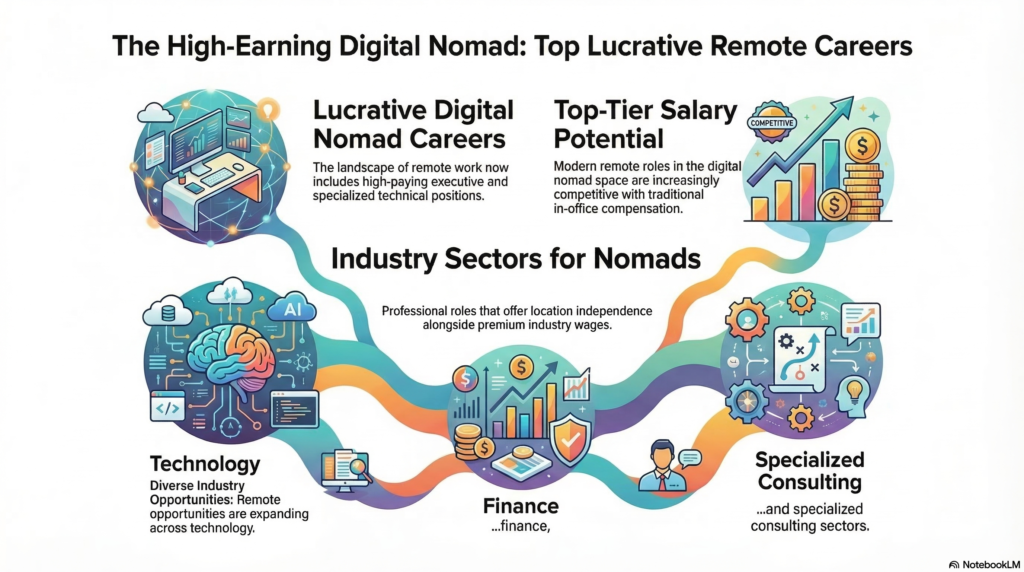
If earning potential is your primary driver, these are the best digital nomad careers ranked by average salary. The table below provides a snapshot of high paying remote jobs in 2026.
| Job Title | Avg. Annual Salary | Key Skills |
| Software Developer | $80,000 – $150,000+ | Python, JavaScript, Java, React |
| DevOps / Cloud Engineer | $95,000 – $160,000+ | AWS, Kubernetes, CI/CD pipelines |
| Cybersecurity Specialist | $85,000 – $140,000+ | Network security, ethical hacking, CISSP |
| Data Analyst | $65,000 – $100,000+ | SQL, Python, Tableau, Excel |
| Digital Marketing Manager | $60,000 – $110,000+ | SEO, PPC, analytics, strategy |
| UX/UI Designer | $65,000 – $110,000+ | Figma, Adobe XD, user research |
| SEO Specialist | $50,000 – $90,000+ | Keyword research, technical SEO, link building |
| Copywriter | $50,000 – $120,000+ | Direct response, persuasion, storytelling |
| Project Manager (Remote) | $55,000 – $95,000+ | Agile, Scrum, Jira, stakeholder management |
| Online Course Creator | $40,000 – $200,000+ | Expertise, video production, marketing |
Where to Find Remote Jobs for Digital Nomads
Knowing where to look is half the battle. Here are the best platforms for finding remote work opportunities in 2026.
Remote Job Boards
These platforms are dedicated exclusively to remote work and are the go-to destinations for location independent jobs:
- RemoteNomadJobs — A curated board focused specifically on remote jobs for digital nomads, with listings across tech, marketing, writing, and design.
- Working Nomads — Aggregates remote job listings from top companies worldwide, filtered by category and location preference.
- NoDesk — A clean, ad-free remote job board with listings for developers, designers, marketers, and more.
- We Work Remotely — One of the largest remote job communities, with thousands of active listings.
- Remote.co — Features vetted remote job listings and resources for new remote workers.
Freelance Platforms
For digital nomads who prefer freelancing over full-time employment, these platforms connect you with clients globally:
- Upwork — The world’s largest freelance marketplace, covering everything from coding to writing to consulting.
- Fiverr — A gig-based platform where freelancers offer services starting at any price point. Great for building initial client relationships.
- Freelancer.com — A competitive bidding platform for short-term and long-term remote projects.
- Toptal — An invite-only network for top 3% of freelance developers, designers, and finance experts.
- 99designs — A platform specifically for freelance graphic designers.
Professional Networks
Don’t underestimate the power of LinkedIn for finding remote work. By optimizing your profile with keywords like ‘remote’ and ‘open to work,’ you can attract inbound opportunities from recruiters and hiring managers worldwide. Join remote work groups, engage with industry content, and connect with decision-makers in your target companies.
Skills Needed to Become a Digital Nomad
Technical Skills
The specific technical skills you need depend on your chosen career. However, the most in-demand technical skills for remote digital nomad jobs include:
- Coding (Python, JavaScript, HTML/CSS) for tech and web roles
- SEO and digital marketing for marketing careers
- Graphic design and video editing for creative roles
- Data analysis and Excel/SQL for analytics positions
- Writing and copywriting for content-based careers
Soft Skills
Technical skills will get you interviews, but soft skills will make you a successful digital nomad. Employers and clients value:
- Communication — Ability to communicate clearly via written messages, emails, and video calls.
- Time Management — Managing your own schedule without a supervisor watching over you.
- Self-Discipline — Staying productive in distracting environments like cafes or beaches.
- Adaptability — Thriving in different time zones, cultures, and working environments.
- Problem-Solving — Finding creative solutions independently.
Tools Digital Nomads Use
These are the remote collaboration tools you’ll encounter in virtually every digital nomad job:
- Slack — Team messaging and channel-based communication.
- Trello / Asana — Visual project management and task tracking.
- Notion — All-in-one workspace for notes, wikis, and project management.
- Zoom / Google Meet — Video conferencing for client calls and team meetings.
- Google Drive / Dropbox — Cloud storage and file sharing.
- Toggl / Clockify — Time tracking for freelancers and remote workers.
How to Get Your First Remote Job (Step-by-Step)
Breaking into the world of remote work can feel overwhelming, but with the right approach, beginners can land their first remote job faster than they think.
Step 1: Learn an In-Demand Skill
Start with one focused skill that aligns with your interests and has strong market demand. Free resources like freeCodeCamp (coding), Google Digital Garage (marketing), Coursera, and YouTube can get you started. Aim to complete a beginner-to-intermediate course within 30 to 90 days.
Step 2: Build a Portfolio
Before applying for jobs, assemble a portfolio showcasing your work. Even if you have no paid experience, create sample projects: design a mock brand identity, write blog posts on topics you know, build a simple website, or analyze a public dataset. A strong portfolio is often more persuasive than a resume.
Step 3: Apply on Remote Job Boards
Create profiles on RemoteNomadJobs, Working Nomads, NoDesk, and Upwork. Tailor your applications to each job posting. Highlight remote work experience (or your readiness for it), your communication skills, and your portfolio. Apply consistently — aim for 5 to 10 quality applications per week.
Step 4: Start Freelancing
If full-time remote jobs feel out of reach initially, start with freelance projects. Even small gigs build your reputation, reviews, and confidence. Use platforms like Fiverr and Upwork to take on beginner projects at lower rates to establish your profile, then gradually raise your prices as your portfolio grows.
Best Countries for Digital Nomads in 2026
Choosing the right base matters as much as finding the right job. These countries offer a perfect blend of affordability, infrastructure, and quality of life for digital nomads.
Portugal
Portugal — especially Lisbon and Porto — has become one of the world’s top digital nomad destinations. The country introduced a dedicated Digital Nomad Visa (D8 Visa) in 2022 that allows remote workers earning above a minimum income threshold to legally live and work in Portugal. Fast internet, low cost of living compared to Western Europe, a vibrant expat community, and warm weather make it a perennial favorite.
Thailand
Thailand is the classic digital nomad destination. Chiang Mai in particular has built an entire ecosystem around nomad workers — with hundreds of co-working spaces, fast internet, and an unbelievably low cost of living. Thailand launched its Long-Term Resident (LTR) Visa in 2022, targeting remote workers, retirees, and high-net-worth individuals.
Bali, Indonesia
Bali has long captured the imagination of digital nomads worldwide. The island’s spiritual culture, stunning scenery, and affordable living costs attract thousands of remote workers each year. The Canggu and Ubud areas are particularly popular. Indonesia introduced a Digital Nomad Visa in 2023, allowing remote workers to stay for up to 5 years tax-free on foreign income.
Mexico
Mexico — particularly Mexico City, Oaxaca, and Playa del Carmen — offers digital nomads proximity to North American time zones, vibrant culture, excellent food, and a relatively low cost of living. The country does not have a dedicated digital nomad visa, but the standard tourist permit (FMM) allows stays of up to 180 days. Many nomads live in Mexico on a perpetual tourist basis or establish residency through a temporary resident visa.
Pros and Cons of the Digital Nomad Lifestyle
Pros
- Freedom to travel and explore new cultures while earning an income.
- Ability to live in lower-cost countries, stretching your income further.
- Flexible schedule that can accommodate personal projects, hobbies, and travel.
- Exposure to diverse perspectives and professional networks worldwide.
- Potential to build multiple remote income streams simultaneously.
Cons
- Time Zone Challenges: Working across multiple time zones can disrupt sleep and make synchronous collaboration difficult.
- Income Instability: Freelancers in particular can experience unpredictable cash flow, especially early in their careers.
- Loneliness and Isolation: Constant travel can make it hard to maintain deep social connections.
- Tax Complexity: Managing taxes as a digital nomad across multiple countries requires research and often professional advice.
- Internet Reliability: Not all destinations offer the fast, reliable internet that remote work demands.
Tips to Succeed as a Digital Nomad
These practical tips will help you thrive in the digital nomad lifestyle:
- Maintain a Consistent Routine: Even while traveling, establish daily work hours and stick to them.
- Invest in Your Setup: A quality laptop, noise-canceling headphones, and a portable WiFi device are non-negotiable.
- Use Co-Working Spaces: They offer reliable internet, community, and a professional environment away from distractions.
- Manage Time Zones Proactively: Use tools like World Time Buddy to schedule meetings and deadlines across time zones.
- Build Multiple Income Streams: Relying on a single client or employer is risky. Diversify across remote income streams as early as possible.
- Stay Tax Compliant: Research your tax obligations in your home country and any countries you reside in. Consider consulting a tax professional who specializes in expats and digital nomads.
- Connect with Other Nomads: Join Facebook groups, Slack communities, and attend nomad meetups to build your network and find support.
Frequently Asked Questions
What jobs can digital nomads do?
Digital nomads can work in any role that can be performed entirely online. The most popular categories include software development, web design, digital marketing, content writing, graphic design, video editing, virtual assistance, online tutoring, and e-commerce management. As long as the work requires only a laptop and internet connection, it qualifies as a digital nomad job.
How do digital nomads get remote jobs?
Digital nomads find remote work through dedicated job boards like RemoteNomadJobs, Working Nomads, and We Work Remotely. Freelance platforms like Upwork and Fiverr are popular for those who prefer project-based work. LinkedIn is increasingly valuable for full-time remote positions. Networking, cold outreach, and referrals from other nomads also play a major role.
Can beginners become digital nomads?
Absolutely. Many digital nomads started with zero experience in their remote career. The key is to choose one beginner-friendly skill — such as virtual assistance, content writing, social media management, or customer support — learn it thoroughly, build a small portfolio, and apply consistently. Many people land their first remote job within 3 to 6 months of focused effort.
What is the highest paying digital nomad job?
Software development, DevOps engineering, and cybersecurity consistently rank as the highest-paying digital nomad jobs, with experienced professionals earning $100,000 to $200,000+ annually. Digital marketing managers, data analysts, and UX/UI designers also command strong salaries in the $70,000 to $130,000 range.
How much do digital nomads earn?
Earnings vary widely based on skill, experience, and career path. Beginners in virtual assistance or customer support might earn $20,000 to $40,000 per year. Mid-level professionals in marketing or design typically earn $50,000 to $80,000. Experienced developers, data scientists, and senior marketers can earn $100,000 to $200,000+. By living in lower-cost countries, even modest incomes can provide a comfortable lifestyle.
Do digital nomads pay taxes?
Yes, most digital nomads are still legally required to file and pay taxes in their home country, regardless of where they live. US citizens, for example, must file US taxes no matter where they live in the world (though the Foreign Earned Income Exclusion may reduce their liability). Additionally, some countries tax residents on worldwide income once you spend a certain number of days there. It’s essential to consult a tax professional who specializes in digital nomad and expat taxation.
Are remote jobs legitimate?
Yes — the vast majority of remote jobs listed on reputable job boards and freelance platforms are legitimate. However, scams exist. Red flags include job offers that require upfront payment, requests for personal banking information before hiring, and salaries that seem unrealistically high for the role. Stick to well-known platforms like RemoteNomadJobs, We Work Remotely, Upwork, and LinkedIn to minimize risk.
What tools do digital nomads use to work remotely?
The most commonly used remote collaboration tools include Slack (communication), Zoom (video calls), Trello or Asana (project management), Notion (documentation), Google Drive (file storage), and Toggl (time tracking). Most companies that hire remote workers will provide access to the tools they use internally.
What are the best countries for digital nomads?
In 2026, the top destinations for digital nomads include Portugal (D8 Digital Nomad Visa), Thailand (LTR Visa), Bali/Indonesia (Digital Nomad Visa), Mexico (180-day tourist permit), Georgia (Remotely from Georgia program), Estonia (Digital Nomad Visa), and Colombia. The best country for you depends on your budget, timezone preferences, internet needs, and lifestyle priorities.
How do I start a digital nomad career with no experience?
Start by identifying a skill that interests you and has remote demand — content writing, virtual assistance, social media management, and customer support are all beginner-friendly. Use free online resources to build that skill over 30 to 90 days. Create a simple portfolio with sample work. Sign up on Upwork or Fiverr and take on your first small projects. Once you have a few reviews and case studies, begin targeting higher-paying clients and full-time remote roles on dedicated job boards.
Start Your Digital Nomad Journey Today
The world of remote jobs for digital nomads is more accessible than ever before. Whether you’re a developer, marketer, writer, designer, or complete beginner, there’s a location independent job out there that fits your skills and lifestyle goals. The digital nomad career path is not reserved for tech geniuses or serial entrepreneurs — it’s open to anyone willing to learn, adapt, and take the leap.
Use this guide as your roadmap. Pick a skill, build a portfolio, apply on platforms like RemoteNomadJobs and Working Nomads, and take that first step toward a life of travel, freedom, and meaningful work — from anywhere in the world.